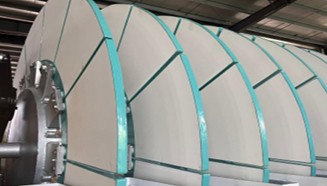
Ceramic Filter Plates
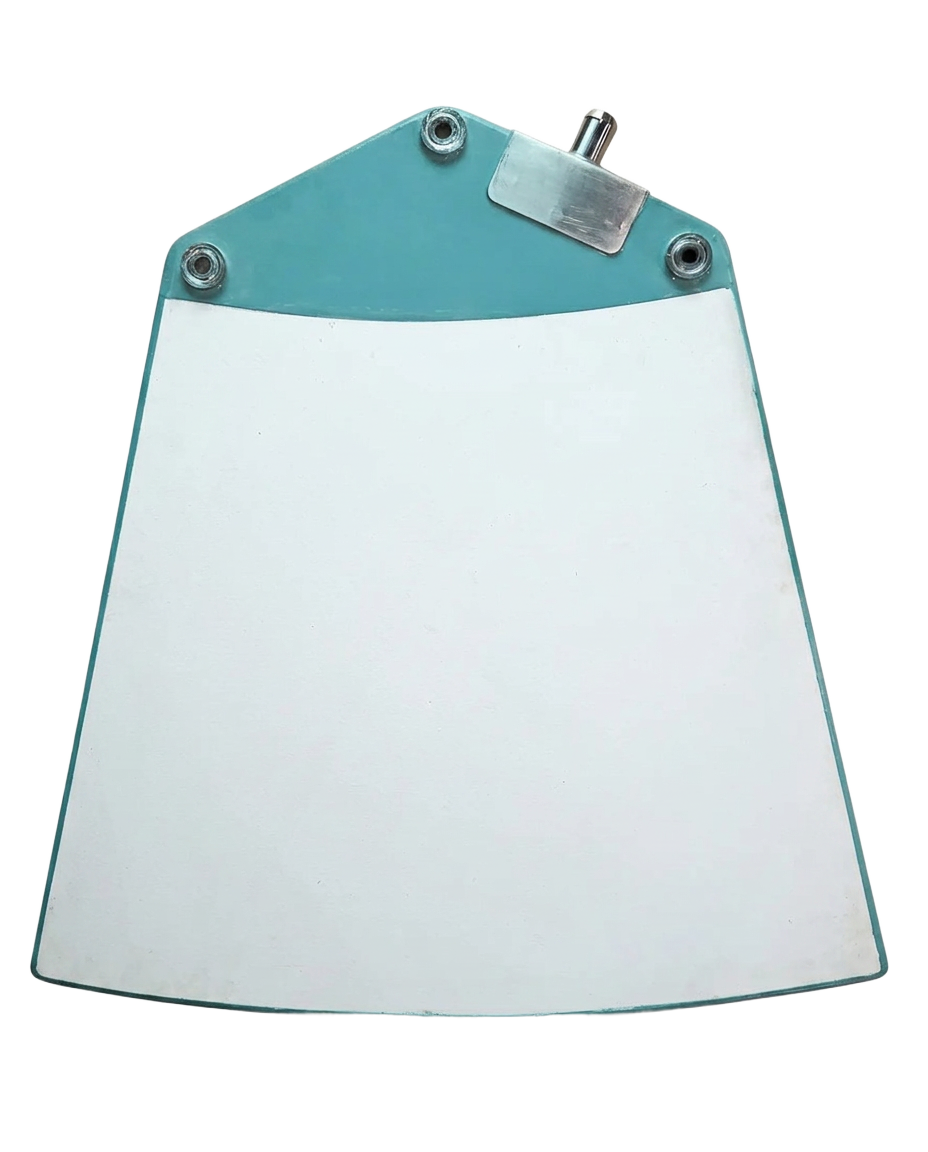
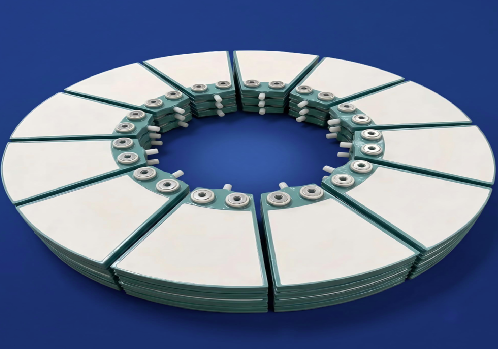
Microporous ceramic sector plates (brown fused alumina, white fused alumina or silicon carbide) giving strong capillary suction, flexural strength ≥ 30 MPa and long service life.

Advanced ceramic solid-liquid separation for mining, minerals and industrial processing: dewater more, spend less energy, and recycle clean water.
≥ 6,400 L/h·m²
High water flux
≥ 9,000 hours
Membrane wear life
8% – 13%
Low filter cake moisture
Typical values.
Ceramic dewatering technology
High-efficiency vacuum dewatering technology for mining slurries, mineral concentrates, metallurgical tailings and industrial environmental processing. Ceramic filtration replaces energy-hungry conventional filters with micro-capillary action, delivering drier cake, clearer filtrate and far lower power consumption.
Three core products
Microporous ceramic sector plates (brown fused alumina, white fused alumina or silicon carbide) giving strong capillary suction, flexural strength ≥ 30 MPa and long service life.
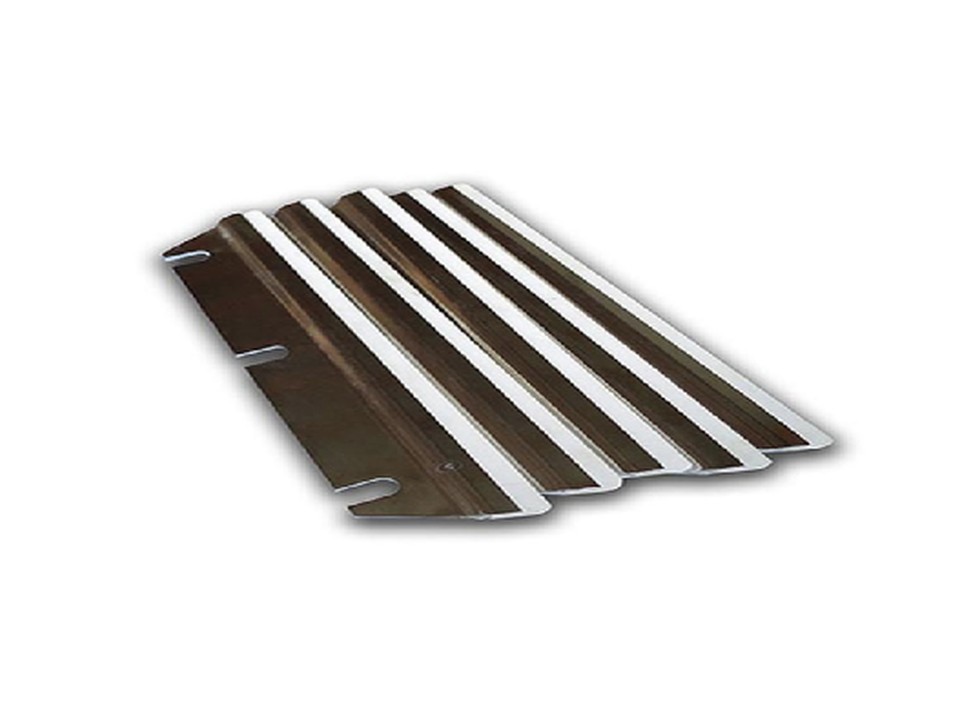
Precision ceramic blades that cleanly discharge the filter cake while leaving a thin protective cake layer to safeguard the plate.
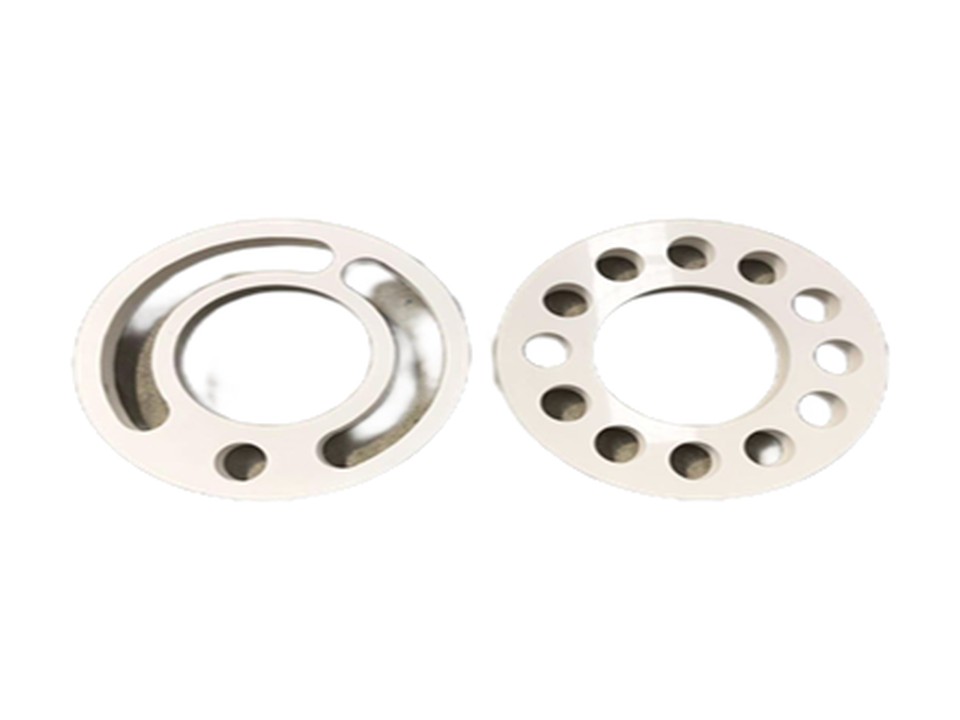
Wear-resistant distribution valve rings that maintain an airtight vacuum seal, stable rotation and no slurry cross-leakage.
Fully automatic programmable operation
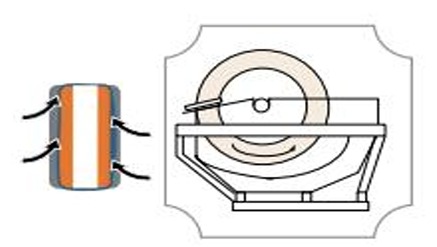
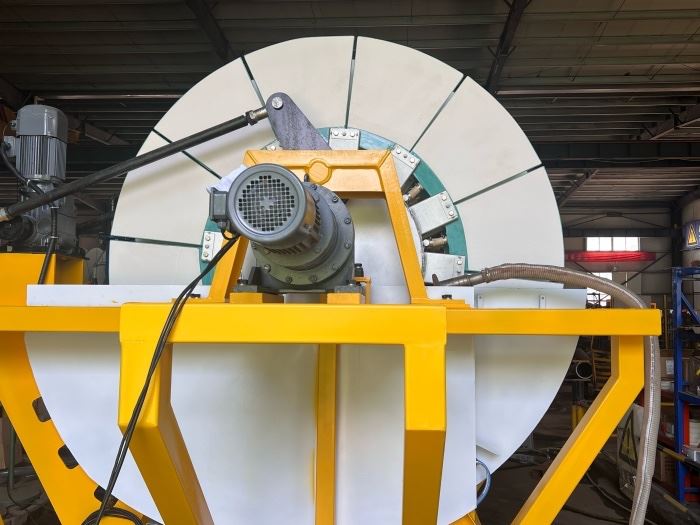
Submerged microporous plates draw liquid through capillary action. A vacuum pump pulls filtrate into the filtrate pipes while cake builds up on the plate faces.
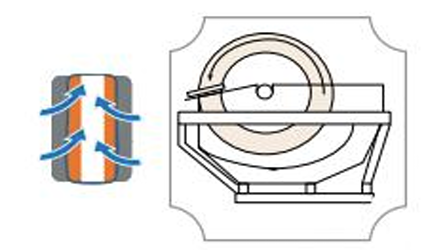
Rotating above the slurry level, continuous capillary action extracts residual moisture, giving minimal cake moisture at very low energy use.
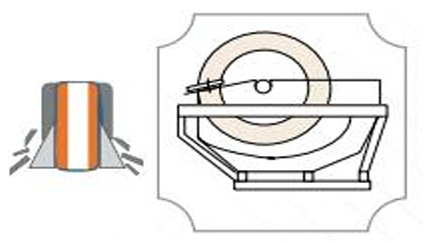
Ceramic scraper knives shave off the dewatered cake. A thin solid layer is retained, preventing scraper contact and protecting the ceramic plate.
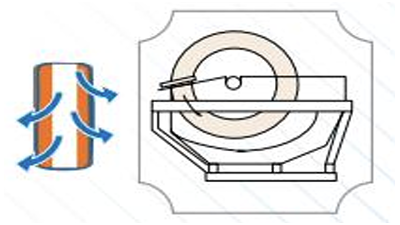
Clean water is back-washed from the inside out to dislodge residue, keeping filtration rates high and regenerating the pores.
Ceramic filter plates
| Parameter | Specification |
|---|---|
| Available sizes | 1, 2, 3, 4, 5, 6, 8, 10, 12 m² |
| Substrate materials | Brown fused alumina (BFA), white fused alumina (WFA), silicon carbide (SiC) |
| Pore size options | 0.5, 1, 2, 5, 8, 10, 15 µm |
| Water flux (at 0.15 MPa) | ≥ 6,400 L/h·m² |
| Flexural strength | ≥ 30 MPa |
| Total porosity | 39–45% |
| Membrane wear life | ≥ 9,000 hours |
| Backwash air pressure | ≥ 0.80 MPa |
Figures are typical values and vary with slurry characteristics. Contact us for a site-specific assessment.
Quality control
| Parameter | Tolerance |
|---|---|
| Plane of assembly ring parallel to plate face | ± 1.5 mm |
| Distance between ring mounting plane and plate face | 8 ± 0.1 mm |
| Hole centre to diagonal line error | ≤ 2.0 mm |
| Gap between adjacent assembled disc sectors | ± 4.0 mm |
| Air-pressure backwash test (wet state) | ≥ 0.80 MPa |
| Normal operating backwash pressure | ≥ 0.4 MPa |
| Ultrasonic and chemical combined wash pressure | ≥ 0.40 MPa |
Benchmark performance
| Mineral | Particle size | Feed concentration (%) | Throughput (kg/m²·h) | Cake moisture (%) |
|---|---|---|---|---|
| Copper concentrate | -200 mesh, 74% | 50–60 | 600–900 | 10–14 |
| Gold concentrate | -200 mesh, 50% | 45–60 | 600–1000 | 10–14 |
| Gold tailings | -200 mesh (60% / 90%) | 40–60 / 55–60 | 400–600 | 15–23 |
| Zinc concentrate | -200 mesh, 90% | 50–63 | 700–900 | 6.5–11 |
| Iron ore concentrate | -400 mesh, 50–60% | 55–60 | 850–1500 | 6–9 |
| Lead concentrate | -200 mesh, 90–98% | 60–70 | 650–800 | 10–12 |
| Bauxite | -200 mesh, 75–80% | 50–60 | 350–450 | 10.5–12 |
| Clean coal | -200 mesh, 80% | 50–60 | 600–930 | 18–20 |
| Fluorite concentrate | -200 mesh, 60% | 55–60 | 750–900 | 8–12 |
| Zinc oxide | -200 mesh, 75% | 55–67 | 620–1500 | 8–12 |
| Nickel concentrate | -200 mesh, 95% | 55–60 | 300–600 | 10–12 |
| Phosphate concentrate | -200 mesh, 50% | 50 | 400–600 | 10–12 |
Figures are typical values and vary with slurry characteristics. Contact us for a site-specific assessment.
Ceramic scraper knives
Precision-set to a controlled 0.5–1.0 mm gap, leaving a thin residual cake layer that acts as a natural buffer against abrasion.
High-purity alumina (95–99% Al₂O₃) or toughened zirconia ceramic, hardness above HRA 88, service life typically 5–10× longer than alloy or plastic scrapers.
Highly resistant to strong acids, caustics, organic solvents and high-salinity leach solutions found in gold, nickel, copper and battery-recycling operations.
Friction rings and valve heads
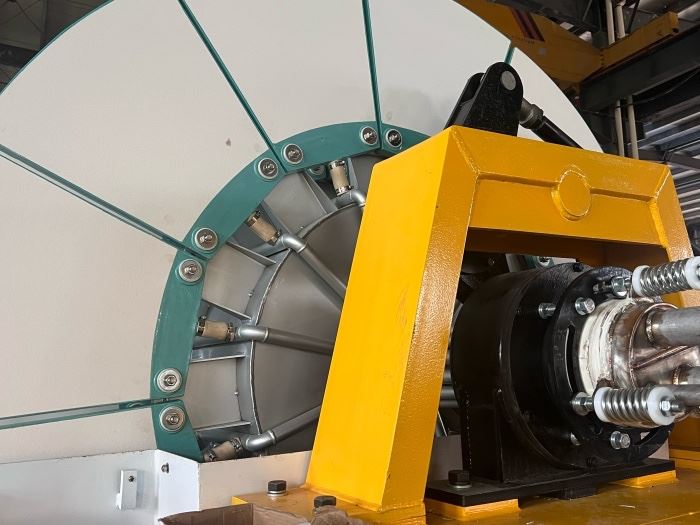
The friction ring is the core dynamic seal between the rotating main shaft barrel and the stationary multi-channel distribution valve head, separating the vacuum suction and backwash water circuits.
Mirror-polished industrial ceramic or reinforced composite sliding pairs minimise friction, overheating, groove galling and pressure drops.
Prevents slurry seepage into the high-pressure backwash zone and maintains vacuum levels (≥ -0.09 MPa) across all shifts.
Complete filter machines
| Model | KC-12 | KC-20 | KC-30 | KC-36 | KC-45 | KC-60 | KC-80 | KC-100 | KC-120 |
|---|---|---|---|---|---|---|---|---|---|
| Filter area (m²) | 12 | 20 | 30 | 36 | 45 | 60 | 80 | 100 | 120 |
| Installed power (kW) | 12.15 | 18.75 | 18.75 | 24.55 | 24.55 | 35.9 | 48.0 | 60.8 | 70.4 |
| Running power (kW) | 8.9 | 16.0 | 16.0 | 20.0 | 20.0 | 29.0 | 39.0 | 48.5 | 56.0 |
| Total weight (t) | 3.5 | 6.0 | 9.0 | 10.0 | 12.0 | 15.0 | 18.0 | 20.0 | 24.5 |
| Length (mm) | 3600 | 4700 | 5800 | 6400 | 7300 | 7450 | 8150 | 8750 | 9050 |
| Width (mm) | 2800 | 2800 | 3170 | 3200 | 3200 | 3530 | 3768 | 3850 | 3850 |
| Height (mm) | 2100 | 2140 | 2530 | 2590 | 2590 | 2880 | 2880 | 3200 | 3200 |
Figures are typical values and vary with slurry characteristics. Contact us for a site-specific assessment.
Why choose this technology
No massive vacuum pumping station. Uses only 10–20% of the electricity of conventional cloth disc and belt filters.
Lower carbon footprintFine pores produce very clean filtrate (typically under 10 ppm suspended solids), supporting in-plant water recycling without secondary clarifiers.
Closed-loop water recoveryPLC-controlled ultrasonic cleaning with dilute acid/alkali washing restores pore permeability without manual tear-down.
Minimal downtimeLocal support
Local supply and support in South Africa
Application assessment and equipment selection
Spares, replacement plates, scrapers and friction rings
Request a quote
Tell us about your slurry, throughput and target moisture, and we'll recommend the right plates, spares or complete machine.
Supplied and supported in Southern Africa by Ceramic Lining Solutions.